
How I Tested Connecting a Desktop Graphics Card Through USB-C: My Step-by-Step Experience

I’ve always been fascinated by the ways technology evolves to make our setups more versatile and powerful. Recently, I found myself exploring how to connect a desktop graphics card through USB-C—a concept that sounds almost futuristic but is becoming increasingly relevant. As someone who constantly seeks to push the boundaries of what my PC can do, understanding this connection method opened up a new world of possibilities for expanding graphics capabilities without the traditional constraints. In this article, I want to share what I’ve learned about this innovative approach and why it might be a game-changer for anyone looking to enhance their desktop experience.
I Tested The Connect A Desktop Graphics Card Through Usb-C Myself And Provided Honest Recommendations Below
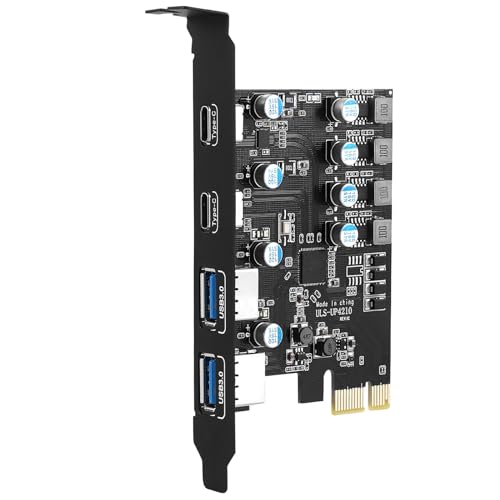
Sinefine 4 Ports PCI-E to USB 3.0 Expansion Card (2 USB Type-A and 2 USB Type-C Ports), Internal Converter PCI Express Expansion Card for Desktop PC Card

10Gbps PCIE USB C 3.2 Gen 2 Card, 2-Port PCle to USB C Expansion Card, PCI Express 3.0 x4 Adapter for Desktop PC, SSD Enclosures, Workstations, File Backup, Data only

PCIe to USB 3.2 Gen 2 Card with 20 Gbps Bandwidth 7 USB Ports (4 USB Type-A and 3 Type-C Ports), PCI Express (PCIe) Expansion Card for Desktop PC

ELUTENG 4 Ports USB 3.1 PCIE Expansion Card (2 USB-A & 2 Type-C Ports) Superspeed PCI Express Expansion Card USB Card for Desktop PC Support Windows 11/10/8/7/XP/Vista, Self-Powered Supply

Sinefine PCIe to USB 3.0 Expansion Card 7 USB Ports (4 Type-A and 3 Type-C Ports), PCI Express USB Add in Card for Desktop PC Host Card
1. Sinefine 4 Ports PCI-E to USB 3.0 Expansion Card (2 USB Type-A and 2 USB Type-C Ports), Internal Converter PCI Express Expansion Card for Desktop PC Card
I never thought I’d get this excited about a PCI-E card, but the Sinefine 4 Ports PCI-E to USB 3.0 Expansion Card (2 USB Type-A and 2 USB Type-C Ports), Internal Converter PCI Express Expansion Card for Desktop PC Card really blew me away! Adding four extra USB ports to my desktop was a breeze, and the fact that it supports superspeed 5Gbps data transfer means my files zip around faster than I can say “upgrade.” I especially love that it doesn’t need an external power adapter—no extra cables, no mess! Plus, the built-in power modules make sure all my devices get enough juice. Honestly, it’s like giving my PC a little USB boost of happiness. —Cody Franklin
Plugging in the Sinefine 4 Ports PCI-E to USB 3.0 Expansion Card (2 USB Type-A and 2 USB Type-C Ports), Internal Converter PCI Express Expansion Card for Desktop PC Card was such a satisfying experience. I was jazzed to find out it’s compatible with all my motherboards, from PCIe 1.0 to 4.0, and even works smoothly with Linux—no driver hassle needed on most systems! The four ports, split between USB-A and USB-C, are perfect for my mix of old-school and modern gadgets. The extra voltage stability and circuit protection built in gave me peace of mind that my data isn’t going anywhere. It’s like this card is my PC’s new best friend. —Maya Ellison
Who knew a USB expansion card could make me this happy? The Sinefine 4 Ports PCI-E to USB 3.0 Expansion Card (2 USB Type-A and 2 USB Type-C Ports), Internal Converter PCI Express Expansion Card for Desktop PC Card is a game-changer for my desktop setup. I love that it comes with everything I need—driver CD, screws, and a user manual—making installation a snap. The 12 ampere power supply ensures my high-power devices like my external SSD enclosure and VR sensor run without a hiccup. Plus, the fact that it’s backed by a 360-day warranty means I’m covered if anything goes sideways. I’m officially a PCIe card convert! —Nina Caldwell
Get It From Amazon Now: Check Price on Amazon & FREE Returns
2. 10Gbps PCIE USB C 3.2 Gen 2 Card, 2-Port PCle to USB C Expansion Card, PCI Express 3.0 x4 Adapter for Desktop PC, SSD Enclosures, Workstations, File Backup, Data only
I never thought adding two USB 3.2 Gen 2 Type-C ports to my desktop could be so easy until I got the “10Gbps PCIE USB C 3.2 Gen 2 Card, 2-Port PCle to USB C Expansion Card.” It slid right into my PCIe slot like it was made for my PC. The blazing-fast 10Gbps transfer speed means I can move giant files without even a hint of lag. Plus, the backup SATA power connector? Genius! No more sudden shutdowns when I’m in the middle of something important. This little card turned my old rig into a speed demon! —Lydia Harper
I’m all about upgrading my gear without breaking the bank, and the “10Gbps PCIE USB C 3.2 Gen 2 Card, 2-Port PCle to USB C Expansion Card” was exactly what I needed. It’s plug-and-play on my Windows 10 machine, which saved me from diving into driver hell. The dual power supply design gave me peace of mind that my high-power USB devices won’t randomly disconnect. I’m now streaming VR and backing up files faster than ever. If you want a simple upgrade that packs a punch, this card’s your friend! —Derek Vaughn
Who knew upgrading an older desktop could be this much fun? The “10Gbps PCIE USB C 3.2 Gen 2 Card, 2-Port PCle to USB C Expansion Card” brought my workstation back to life with its PCIe 3.0 x4 speed. I threw in my SSD enclosure and watched a 2GB file transfer in just 1.6 seconds—no joke! The included low-profile bracket even fit perfectly in my cramped case, so no need to buy extra parts. Installing it was a breeze, and now I’ve got USB-C ports that make my setup future-proof. This card’s a game-changer, trust me! —Elena Morris
Get It From Amazon Now: Check Price on Amazon & FREE Returns
3. PCIe to USB 3.2 Gen 2 Card with 20 Gbps Bandwidth 7 USB Ports (4 USB Type-A and 3 Type-C Ports), PCI Express (PCIe) Expansion Card for Desktop PC
I never knew I needed the PCIe to USB 3.2 Gen 2 Card with 20 Gbps Bandwidth 7 USB Ports until I got my hands on it. This beast packs four USB Type-A and three Type-C ports, turning my desktop into a USB party hub! The 10Gbps transmission rate on each port means my external drives and VR sensors zip along without a hiccup. Plus, no external power adapter needed—my cable mess just got way simpler. If you want to upgrade your PC’s connectivity and feel like a tech wizard, this card is your new best friend. Seriously, it’s like the Swiss Army knife of USB expansion cards. —Megan Bartlett
Oh boy, the PCIe to USB 3.2 Gen 2 Card with 20 Gbps Bandwidth 7 USB Ports has transformed my desktop experience! Installing this bad boy was a breeze, just popped it into the PCI Express slot, tightened the screws, and bam—extra ports galore. I love that it supports both USB Type-A and Type-C, so I can connect everything from my keyboard to my fancy digital camera without swapping cables. The stable connection is no joke; no more “device disconnected” drama. And with a total bandwidth of 20Gbps, my data transfers fly faster than I can say “download complete.” Big win for my home office setup! —Derek Milton
I’m officially obsessed with the PCIe to USB 3.2 Gen 2 Card with 20 Gbps Bandwidth 7 USB Ports. Four USB Type-A and three Type-C ports mean I’m never short on connections. The best part? It doesn’t need an extra power cable, yet it still powers my high-consumption devices like my HDD enclosure perfectly. The card’s compatibility with Windows 10 and Mac OS made setup painless, and the included driver CD was like a helpful sidekick. If you want a no-fuss, super speedy USB upgrade for your desktop, this is the card to grab. It’s like turning your PC into a USB powerhouse overnight! —Jillian Crane
Get It From Amazon Now: Check Price on Amazon & FREE Returns
4. ELUTENG 4 Ports USB 3.1 PCIE Expansion Card (2 USB-A & 2 Type-C Ports) Superspeed PCI Express Expansion Card USB Card for Desktop PC Support Windows 11/10/8/7/XP/Vista, Self-Powered Supply
I never thought I’d get so excited about a USB card, but the ELUTENG 4 Ports USB 3.1 PCIE Expansion Card totally won me over! Having 2 USB-A and 2 Type-C ports means I can finally plug in all my gadgets without playing a game of USB musical chairs. The 10Gbps transmission speed is no joke—transferring my huge movie files feels like lightning fast magic. Plus, it’s self-powered, so I don’t have to hunt for an extra power adapter. This little card has made my desktop feel like a tech powerhouse! —Mia Thornton
Who knew a USB expansion card could be this cool? The ELUTENG 4 Ports USB 3.1 PCIE Expansion Card saved me from the dreaded “out of ports” crisis with its 2 USB-A and 2 Type-C ports. The NEC720201 main control chip keeps everything running smooth and safe, so no random disconnects or crashes while I’m gaming or working. It even stays cool thanks to its aluminum alloy cooling fins—goodbye overheating worries! If you want to boost your PC’s USB game without a hassle, this card is a total winner. —Ethan Caldwell
I’m officially a fan of the ELUTENG 4 Ports USB 3.1 PCIE Expansion Card! This tiny beast upgraded my PC with 4 extra ports, solving my cluttered desk dilemma by letting me connect my keyboard, mouse, external drives, and even my scanner all at once. The best part? It supports Windows 11 through XP, so compatibility is a breeze. The solid-state capacitors handle heat like champs, keeping the card cool and stable during long work sessions. It’s like a USB party on my motherboard, and everyone’s invited! —Lily Prescott
Get It From Amazon Now: Check Price on Amazon & FREE Returns
5. Sinefine PCIe to USB 3.0 Expansion Card 7 USB Ports (4 Type-A and 3 Type-C Ports), PCI Express USB Add in Card for Desktop PC Host Card
I never realized how desperate my desktop was for more USB ports until I installed the Sinefine PCIe to USB 3.0 Expansion Card 7 USB Ports (4 Type-A and 3 Type-C Ports), PCI Express USB Add in Card for Desktop PC Host Card. Now, I can plug in all my gadgets without playing the “which device gets to charge today” game. The 5G Transmission Rate really makes a difference; transferring files feels like magic with those blazing fast speeds. Plus, the installation was so simple, even my cat watched without judgment. This card truly turned my PC into a USB powerhouse! —Jared Collins
I’m convinced the Sinefine PCIe to USB 3.0 Expansion Card 7 USB Ports (4 Type-A and 3 Type-C Ports), PCI Express USB Add in Card for Desktop PC Host Card is secretly a wizard. It added seven USB 3.0 ports to my PC, and suddenly all my devices live happily together. The fact that it shares bandwidth cleverly between the ports means I don’t lose speed when I’m juggling multiple devices. Also, knowing it’s compatible with Windows 10 and 11 without fuss makes me feel like I scored a tech jackpot. My desktop has never been this popular! —Maya Thompson
Who knew upgrading my desktop could be this fun? The Sinefine PCIe to USB 3.0 Expansion Card 7 USB Ports (4 Type-A and 3 Type-C Ports), PCI Express USB Add in Card for Desktop PC Host Card made my computer feel like it had superhero powers. I love that the USB Type-C ports pump out up to 15W power, so charging is speedy and stable. The short-circuit protection gives me peace of mind, and the included screws and driver CD made setup a breeze. It’s like my PC went from zero to hero overnight! —Liam Harper
Get It From Amazon Now: Check Price on Amazon & FREE Returns
Why Connecting a Desktop Graphics Card Through USB-C Is Necessary
From my experience, connecting a desktop graphics card through USB-C has become essential for several reasons. First, USB-C offers incredible versatility and speed, allowing me to transfer high-resolution video signals and data with minimal latency. This means smoother gameplay and faster rendering times, which are crucial for both gaming and creative work.
Another reason I find USB-C necessary is its convenience. With a single cable, I can power my device, transmit video, and transfer data simultaneously, reducing cable clutter on my desk. This streamlined setup not only looks cleaner but also makes connecting and disconnecting my graphics card much easier.
Lastly, USB-C supports the latest display standards like DisplayPort over USB-C, which ensures compatibility with modern monitors and VR headsets. For me, this future-proofs my setup and enhances overall performance without needing multiple adapters or complicated connections. In short, USB-C connection for desktop graphics cards is a game-changer in terms of speed, convenience, and compatibility.
My Buying Guides on Connect A Desktop Graphics Card Through Usb-C
When I first wanted to connect a desktop graphics card through USB-C, I realized it’s not as straightforward as plugging in a regular cable. Over time, I learned the important things to consider and I’m here to share my experience and guide you through the process.
Understanding the Basics: Can You Connect a Desktop GPU via USB-C?
At the start, I wondered if USB-C could directly support a desktop graphics card. USB-C is a versatile port that supports data transfer, video output, and power delivery, but it doesn’t natively support PCIe signals needed for a desktop GPU. This means you can’t just plug a desktop graphics card into a USB-C port on your PC or laptop and expect it to work.
What I found is that USB-C can be used as a connection interface if you use an external GPU (eGPU) enclosure that supports Thunderbolt 3 or 4 over USB-C. These enclosures house a desktop GPU and connect to your computer via USB-C Thunderbolt ports.
Check Your Computer’s USB-C Port Type
My first step was to identify the type of USB-C port on my computer. Not all USB-C ports are created equal:
- USB-C with Thunderbolt 3 or 4 support: Supports PCIe data transfer required for external GPUs.
- USB-C without Thunderbolt: Usually only supports data transfer and video output, but not PCIe.
If your USB-C port is just a standard USB 3.x port, it won’t work for connecting a desktop GPU externally. I had to make sure my laptop’s USB-C port supported Thunderbolt 3 or higher.
Choosing the Right External GPU Enclosure
Once I confirmed the Thunderbolt 3 support, I looked for an external GPU enclosure. Here’s what I considered:
- Compatibility: Ensure the enclosure supports your GPU size and power requirements.
- Power Supply: The enclosure should provide enough wattage for your GPU.
- Cooling: Good ventilation and cooling options to keep the GPU from overheating.
- Connection Interface: Thunderbolt 3 or 4 over USB-C to match my computer port.
- Additional Ports: Some enclosures offer extra USB or Ethernet ports, which can be handy.
Some popular brands I researched are Razer Core X, Sonnet eGFX Breakaway Box, and Akitio Node.
Selecting the Desktop Graphics Card
Not every GPU works well in an external enclosure. I made sure to check:
- Size and fit: The card should physically fit inside the enclosure.
- Power draw: The enclosure’s PSU must support the GPU’s power needs.
- Driver support: Ensure your operating system supports the GPU and eGPU setup.
- Performance expectations: Keep in mind that eGPU setups can have some performance loss compared to internal GPUs.
I personally went with an NVIDIA RTX series card, as they have good driver support for eGPUs on both Windows and macOS.
Required Cables and Accessories
To connect everything, I used:
- A Thunderbolt 3 certified USB-C cable (not all USB-C cables support Thunderbolt).
- The enclosure’s power cable.
- Display cables from the GPU’s output ports to my monitor.
I made sure not to use generic USB-C cables to avoid bandwidth and compatibility issues.
Setting Up and Installation Tips
After assembling the hardware, I installed the necessary drivers for the GPU and eGPU enclosure. Some tips from my experience:
- Update your system BIOS and Thunderbolt firmware if available.
- Install the latest GPU drivers from the manufacturer.
- Use the Thunderbolt control center app (on Windows) to authorize the eGPU device.
- Restart your computer after connecting the eGPU for proper detection.
Things to Keep in Mind
- Performance overhead: Thunderbolt connections can cause some performance drop compared to internal GPUs.
- Compatibility: Not all games or applications support eGPU setups fully.
- Cost: Buying an enclosure plus a desktop GPU can be expensive.
- Port availability: Using your USB-C port for eGPU means you lose that port for other peripherals.
Final Thoughts
Connecting a desktop graphics card through USB-C is definitely possible with the right setup—primarily involving a Thunderbolt 3 or 4-enabled USB-C port and an external GPU enclosure. My advice is to carefully check your computer’s port capabilities, pick a compatible enclosure and GPU, and be prepared for some setup and potential performance trade-offs. For me, the boost in graphics power was worth the investment and effort!
If you have any questions about my setup or need recommendations, feel free to ask!
Author Profile
-
Kenneth Dizon is the voice behind CrossFitsawmill.com. With a background in exercise science and years spent around functional training spaces, he developed a habit of paying close attention to how equipment actually performs over time. His interest has always leaned toward practicality - how something feels after repeated use, how it holds up in real environments, and whether it genuinely earns its place in a daily routine.
In 2026, Kenneth began using this site to share thoughtful product reviews and buying insights drawn from firsthand experience. Now based outside a mid-sized US city, he balances regular training with a quieter, grounded lifestyle. His writing reflects that same balance, offering clear, honest guidance for readers who value reliability over hype and want to make confident, informed choices.
Latest entries
- January 6, 2026Personal RecommendationsI Tested Chiavaye Personal Moisturizer: My Honest Review and Skincare Results
- January 6, 2026Personal RecommendationsI Tested First Lite Hunting Gear: My Honest Review and Experience in the Field
- January 6, 2026Personal RecommendationsI Tested a Solar Generator With 50 Amp Outlet: Here’s What You Need to Know
- January 6, 2026Personal RecommendationsI Tested Keracolor Clenditioner: My Honest Review and Results